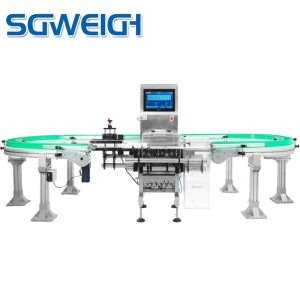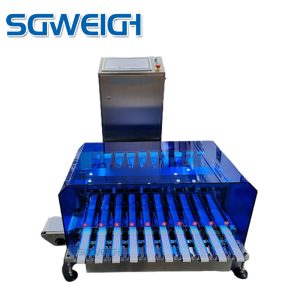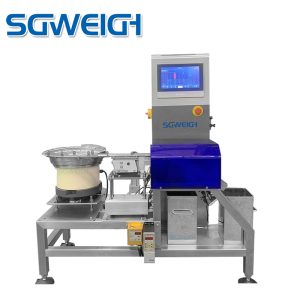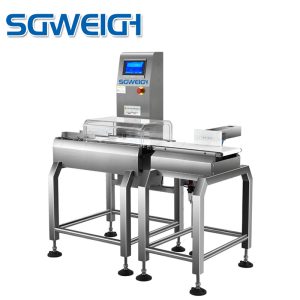
Ultra-High-Speed Carton Box Checkweigher for Pharmaceutical Production Lines
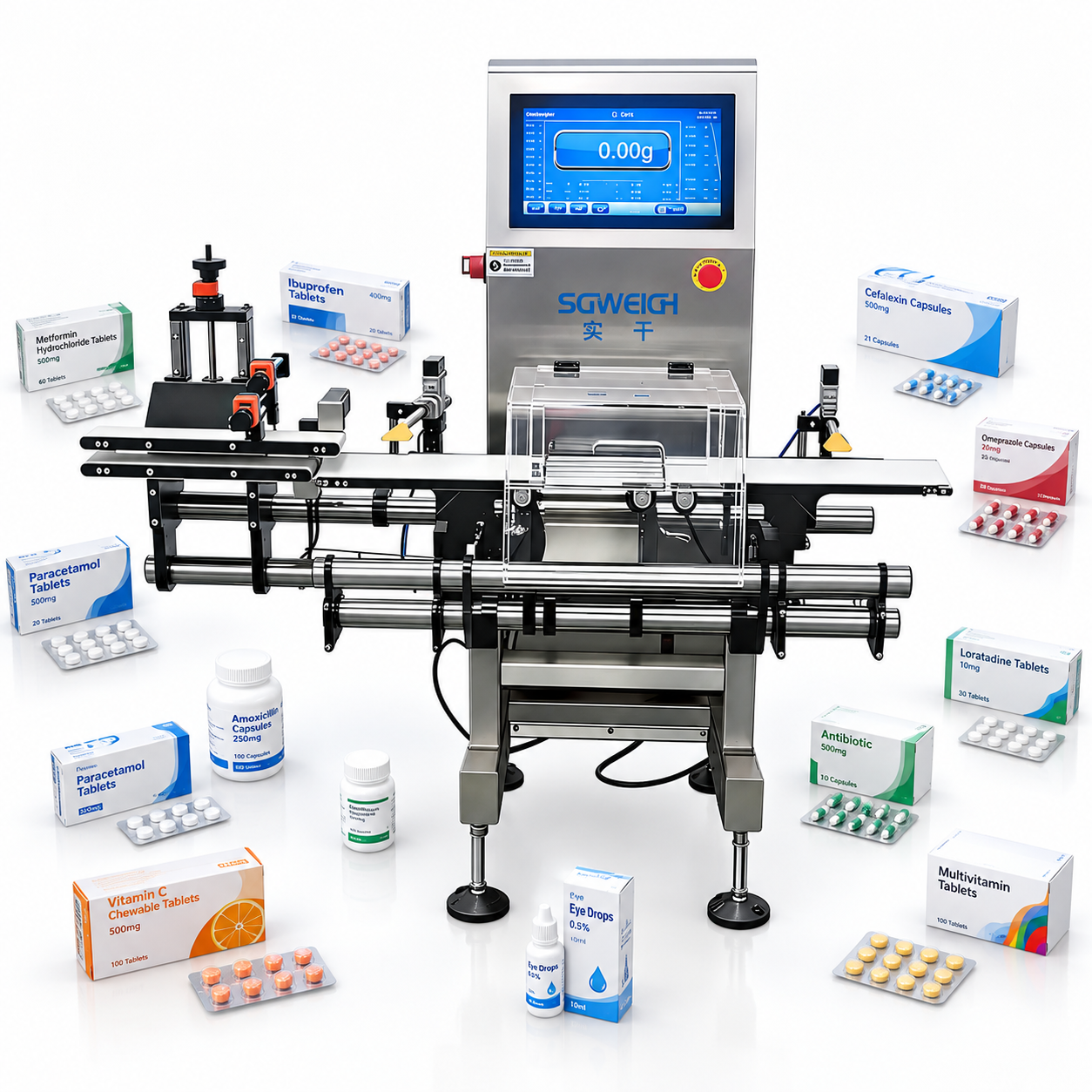
As pharmaceutical packaging lines continue to increase production output, accurate weight inspection of medicine cartons has become an important part of end-of-line quality control. An ultra-high-speed carton checkweigher enables pharmaceutical manufacturers to weigh individual cartons dynamically while they move along a conveyor, helping identify products with weight deviations without unnecessarily interrupting production.
Designed for pharmaceutical packaging applications, an automatic carton checkweigher can be integrated into existing cartoning and packaging lines to support continuous weight inspection, automatic product sorting, and production data monitoring.
Why Is Weight Inspection Important for Pharmaceutical Cartons?
Medicine cartons may contain tablets, capsules, blister packs, leaflets, and other packaging components. Missing items, incorrect quantities, or packaging inconsistencies can cause measurable weight deviations.
Manual sampling may not identify every individual carton with an abnormal weight. An automatic high-speed carton checkweigher provides inline inspection of each passing carton, allowing manufacturers to identify potential packaging issues earlier in the production process.
Typical applications include:
- Tablet and capsule cartons
- Blister-packed pharmaceutical products
- Medicine boxes containing instruction leaflets
- Small pharmaceutical cartons and retail medicine packages
- High-volume pharmaceutical cartoning lines
Weight inspection serves as an additional quality-control measure. It can help identify potential missing components but does not independently confirm the exact contents of every carton.
How Does an Ultra-High-Speed Carton Checkweigher Work?
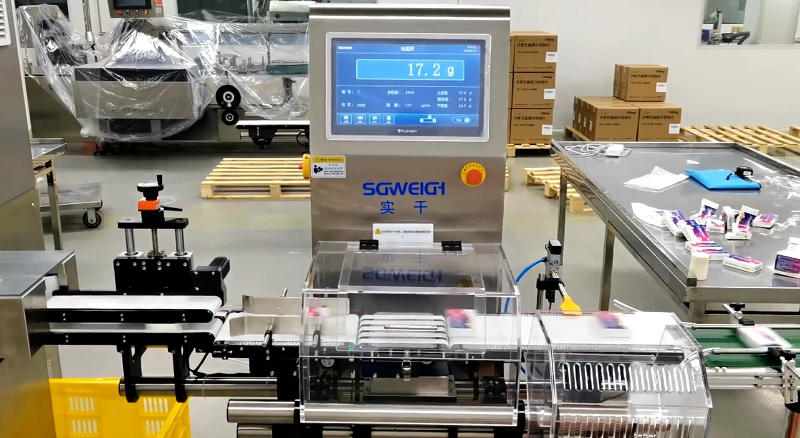
An automatic carton checkweigher uses a dynamic weighing system to measure the weight of individual cartons while they move through the inspection station.
1. Automatic product feeding
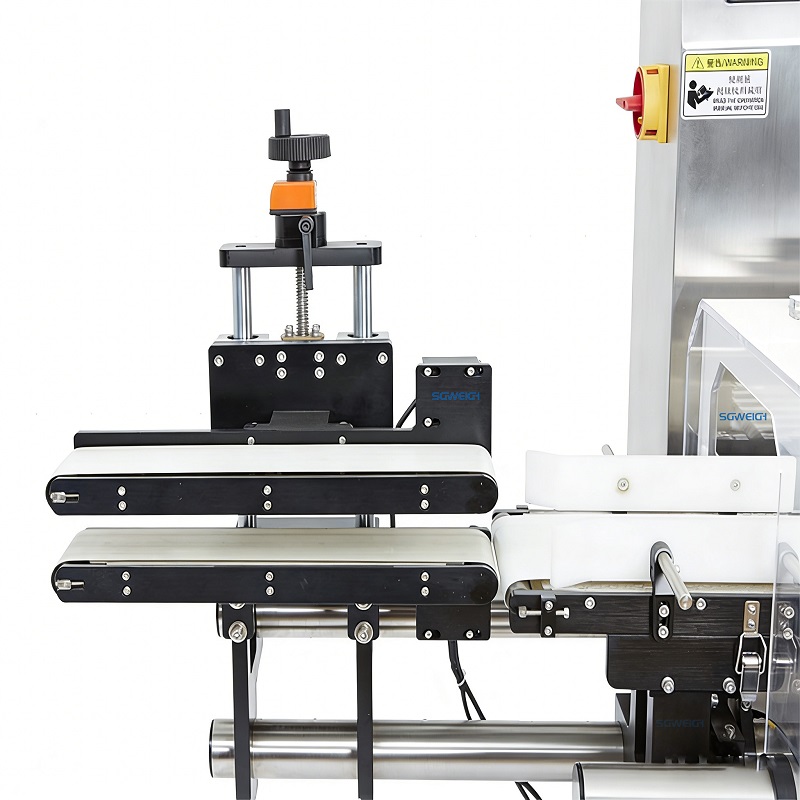
Cartons enter the checkweigher conveyor from an upstream packaging machine. The conveyor transports products toward the weighing section at a controlled speed.
2. Dynamic weight measurement
A precision load cell measures the weight of each carton as it passes through the weighing platform. The control system processes the weight signal to determine the measured product weight.
3. Weight comparison and evaluation
The measured weight is compared with a preset target weight and allowable tolerance range. Cartons outside the configured limits are identified as underweight or overweight products.
4. Automatic rejection or separation
When connected to a suitable reject mechanism, the system separates nonconforming cartons from accepted products. Depending on the line configuration, rejection may use a pusher, air blast, drop flap, or another compatible mechanism.
5. Data recording and production monitoring
Depending on the control system configuration, the checkweigher can display production counts, weight results, rejection statistics, and other inspection data to help operators monitor packaging performance.
What Are the Key Features of a High-Speed Carton Checkweigher?
Continuous Dynamic Weighing
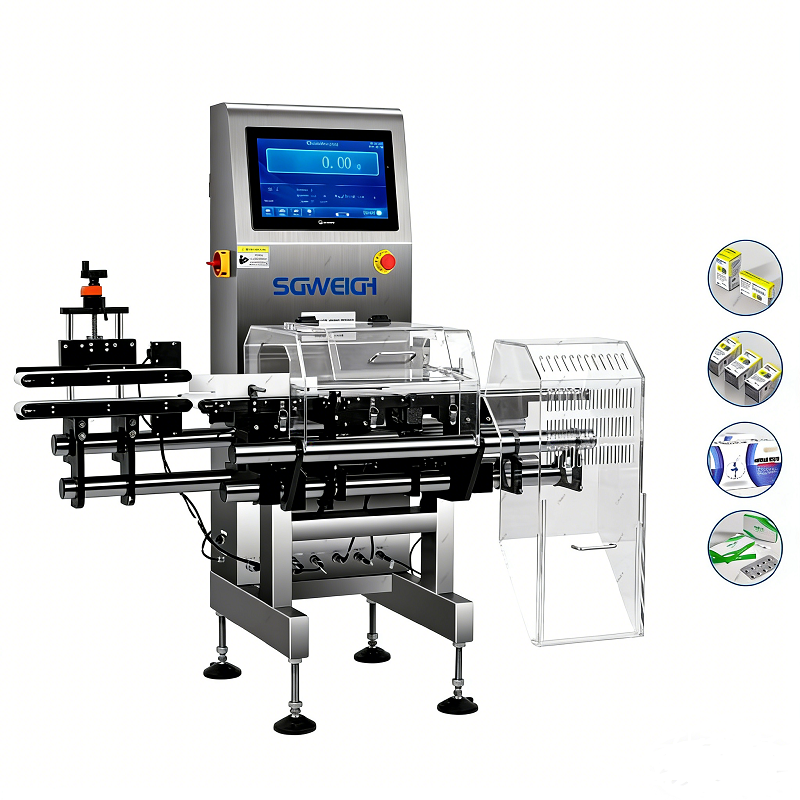
The system weighs cartons while they move along the conveyor, supporting continuous inspection without requiring operators to stop the production line for every measurement.
High-Speed Inspection Capability
A high-speed carton checkweigher is designed for applications where packaging throughput and weighing stability must work together. Actual inspection speed depends on carton dimensions, product spacing, conveyor speed, weighing range, and required accuracy.
Weight Deviation Detection
Preset upper and lower weight limits help identify cartons whose measured weight falls outside the specified acceptance range. This can support the detection of missing tablets, absent leaflets, or other packaging abnormalities when the resulting weight difference is measurable.
Automatic Reject System
An integrated reject mechanism can remove cartons that fail the configured weight criteria. Proper product spacing and reject confirmation can help reduce the risk of removing the wrong carton or allowing a rejected carton to continue downstream.
Integration with Pharmaceutical Packaging Lines
The checkweigher can be configured for integration with upstream cartoning equipment and downstream packaging or inspection systems. Conveyor height, product transfer, communication interfaces, and rejection methods should be confirmed during project design.
User-Friendly Operation
A touchscreen interface can allow authorized operators to select product recipes, configure target weights and tolerance limits, and review inspection results, depending on the system configuration.
How Can a Carton Checkweigher Help Detect Missing Tablets?
A carton checkweigher can identify a potential missing-tablet problem when the weight difference between a complete carton and an incomplete carton is sufficiently large relative to the system’s measurement capability and normal product-weight variation.
For example, if a medicine carton normally contains a defined number of blister packs and a missing blister causes a measurable reduction in total weight, the checkweigher can flag the carton for rejection or further inspection.
However, the effectiveness of missing-component detection depends on several factors:
- The weight difference caused by the missing component
- Variation in the weight of cartons and their contents
- The checkweigher’s verified accuracy and repeatability
- Conveyor speed and product spacing
- The target weight and tolerance settings
For this reason, manufacturers should conduct product testing using representative cartons and known missing-component samples before defining inspection limits. Where the weight difference is too small or overlaps with normal variation, a vision inspection system or another complementary inspection method may be necessary.
How Should Manufacturers Choose an Ultra-High-Speed Carton Checkweigher?
Selecting a suitable system requires more than comparing the maximum advertised speed. Manufacturers should evaluate the complete production application.
| Selection factor | What to confirm |
|---|---|
| Production speed | Required cartons per minute under actual operating conditions |
| Carton dimensions | Minimum and maximum carton length, width, and height |
| Weighing range | Minimum and maximum gross product weight |
| Accuracy and repeatability | Verified performance with the actual cartons |
| Reject mechanism | Suitable separation method and reject confirmation |
| Line integration | Conveyor height, transfer gaps, and control signals |
| Data management | Available production statistics and communication functions |
| Cleaning and maintenance | Accessibility of the conveyor and weighing components |
A properly configured high-speed carton checkweigher helps balance inspection accuracy, production efficiency, and reliable product separation.
Conclusion
An ultra-high-speed carton checkweigher is a practical solution for pharmaceutical manufacturers that need continuous weight inspection of medicine cartons at high production volumes. By combining dynamic weighing, preset weight limits, automatic rejection, and production monitoring, it can support packaging quality control while reducing dependence on manual sampling.
The most suitable configuration depends on the carton size, target throughput, required weighing performance, and packaging-line layout. Product trials are recommended to verify speed, accuracy, and missing-component detection performance before installation.
Looking for an automatic high-speed carton checkweigher for your pharmaceutical packaging line? Contact our team with your carton dimensions, product weight, required cartons per minute, and target accuracy to discuss a suitable inspection solution.

TAGS