Although both devices are used to measure weight, a checkweigher and a weighing scale serve different purposes in industrial and commercial applications.
Quick Comparison
| Feature | Checkweigher | Weighing Scale |
|---|---|---|
| Weighing Method | Dynamic (in-motion) | Static (stationary) |
| Application | Production lines | Manual weighing |
| Speed | High-speed automatic inspection | One item at a time |
| Accuracy Control | Compares weight against preset limits | Displays actual weight |
| Product Rejection | Automatic reject system available | No reject function |
| Data Collection | Production statistics and traceability | Basic weight measurement |
| Integration | Works with conveyors and automation systems | Stand-alone equipment |
What Is a Checkweigher?
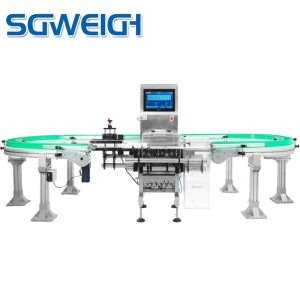
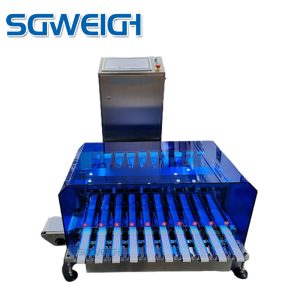
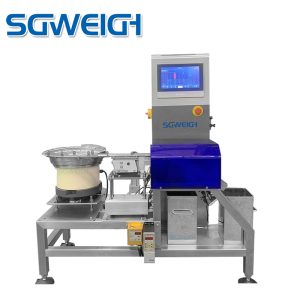
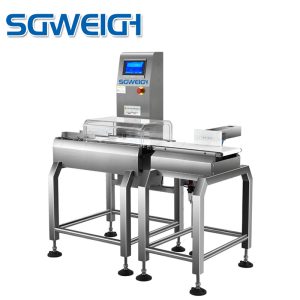
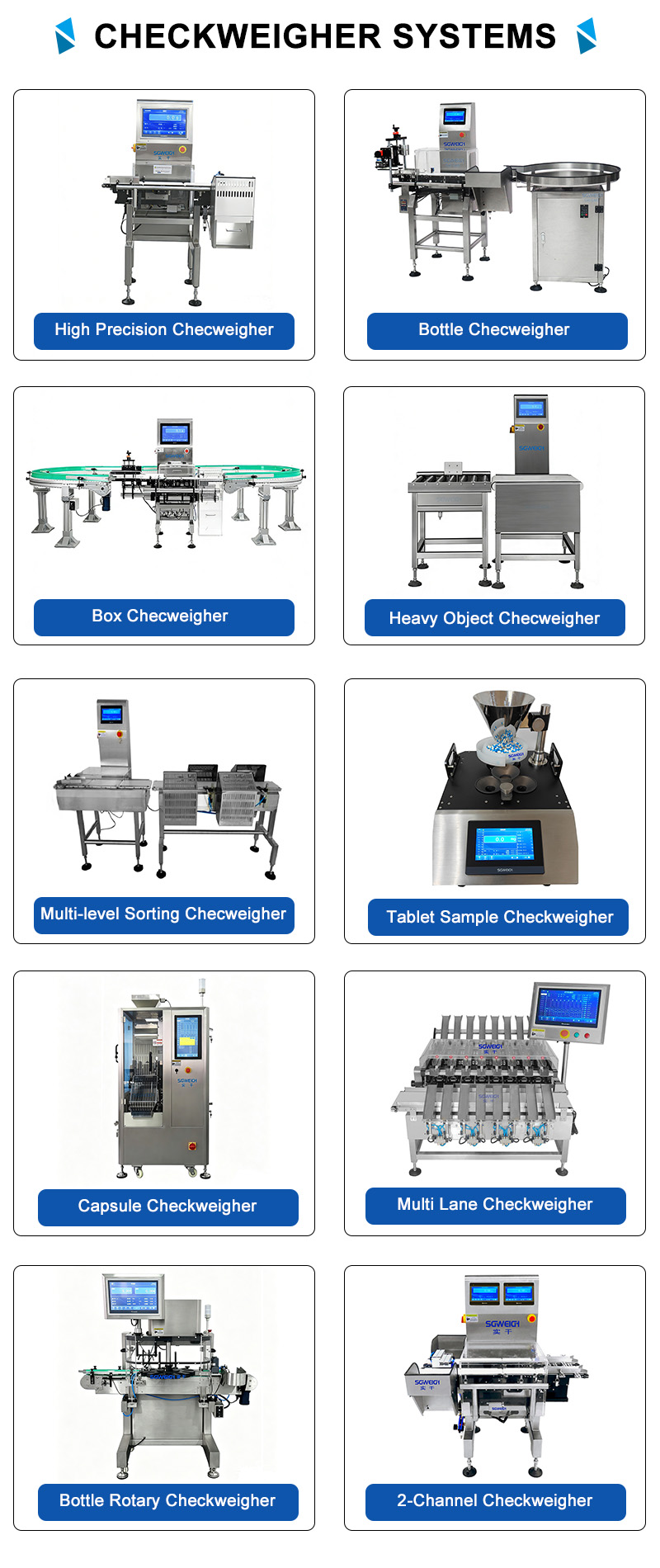
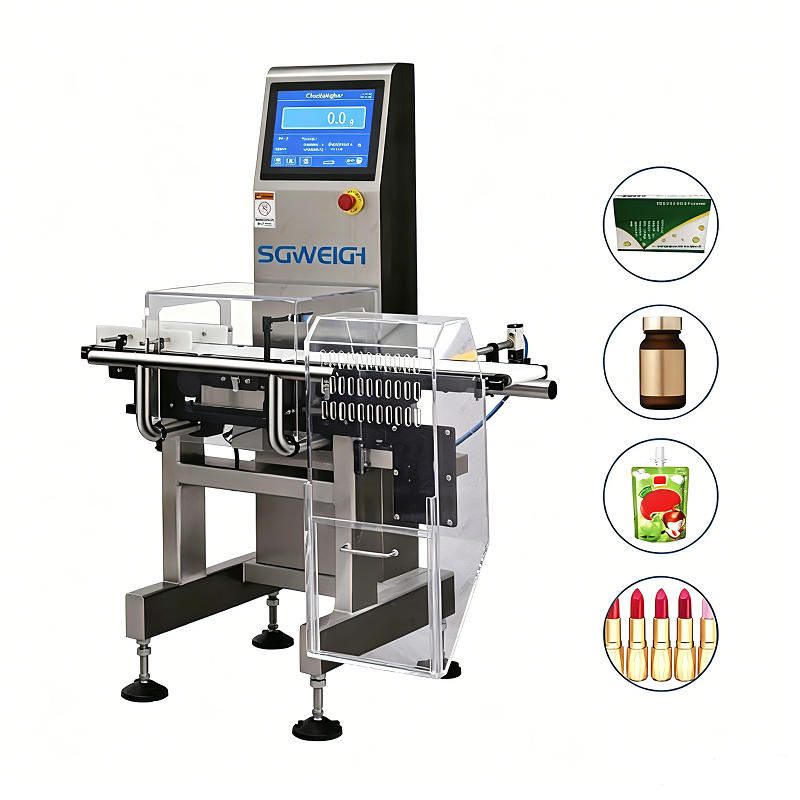
A checkweigher is an automatic weighing system designed to inspect products while they are moving on a conveyor belt. It verifies whether each product falls within predefined weight tolerances and automatically rejects underweight or overweight items.
Typical Applications
- Food packaging lines
- Pharmaceutical production
- Beverage manufacturing
- Cosmetics packaging
- Logistics and distribution centers
Key Benefits
- 100% weight inspection
- Automatic rejection of non-conforming products
- Reduced product giveaway
- Improved quality control
- Compliance with industry regulations
- Real-time production monitoring
What Is a Weighing Scale?
A weighing scale is a stationary device used to measure the weight of an object placed on its platform. The operator manually places the item on the scale and reads the displayed weight.
Typical Applications
- Laboratory weighing
- Warehouse operations
- Retail stores
- Shipping and receiving
- Quality sampling inspections
Key Benefits
- Simple operation
- High precision for static measurements
- Lower investment cost
- Suitable for manual weighing tasks
When Should You Choose a Checkweigher?
A checkweigher is the better solution when:
- Products move continuously on a production line.
- Every package must be inspected automatically.
- Missing components need to be detected.
- Underweight and overweight products must be removed automatically.
- Production efficiency and quality control are priorities.
When Should You Choose a Weighing Scale?
A weighing scale is suitable when:
- Products are weighed individually.
- Production volume is low.
- Manual operation is acceptable.
- Automatic rejection is not required.
- Basic weight measurement is the primary goal.
Conclusion
The main difference between a checkweigher and a weighing scale is that a checkweigher performs automatic, high-speed, in-motion weight inspection on production lines, while a weighing scale measures the weight of stationary objects manually. For manufacturers seeking 100% product inspection, quality assurance, and automated production control, a checkweigher is the preferred solution. A weighing scale remains the ideal choice for simple static weighing tasks and laboratory or warehouse applications.

TAGS