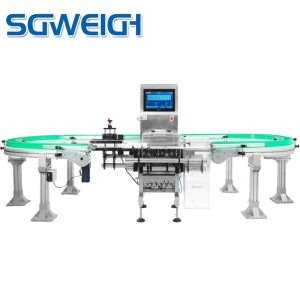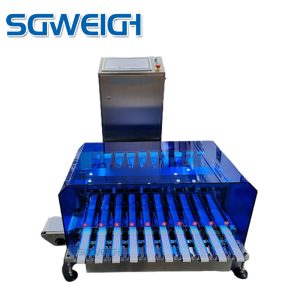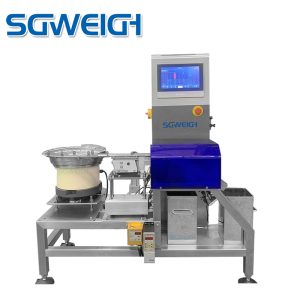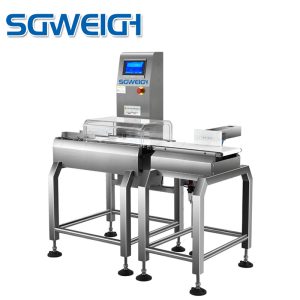
The accuracy of an Automatic Checkweigher is a critical performance indicator that directly impacts product quality control, production efficiency, and compliance with regulatory standards. It is determined by a combination of mechanical design, electronic components, environmental conditions, product characteristics, and software algorithms. Below is a professional breakdown for global manufacturers and buyers:
1. Core Hardware Components
Load Cell (Weighing Sensor)
- Type & Accuracy Class: High-precision strain gauge, electromagnetic force restoration (EMFR), or piezoelectric sensors, with OIML certification (C3, C4, C6) being the industry standard.
- Performance Metrics: Creep, hysteresis, and temperature drift directly affect long-term weighing stability.
- Range Matching: Optimal accuracy is achieved when the product weight falls within 30%–70% of the sensor’s full range.
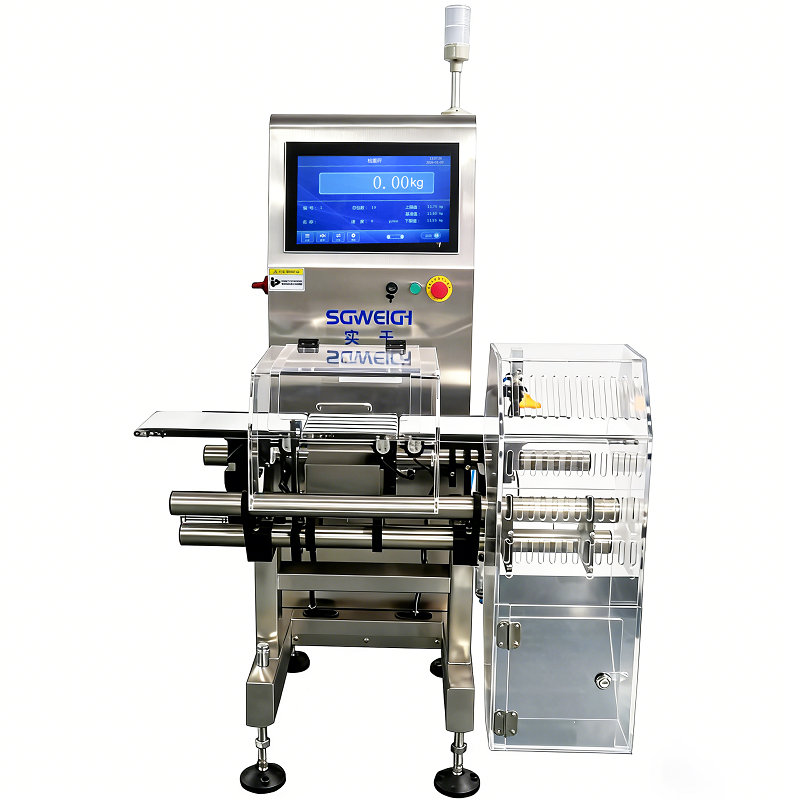
Weighing Controller & AD Converter
- High-speed analog-to-digital (AD) conversion (24-bit or higher) and fast sampling rates ensure real-time signal capture.
- Professional anti-interference circuits and signal amplification modules reduce noise interference.
Mechanical Structure & Conveyor System
- Rigid, vibration-damped weighing platform to eliminate structural resonance.
- Precision conveyor components: flat, uniform belts, concentric rollers, and stable tension control.
- Smooth drive systems (servo, variable-frequency motors) to minimize belt vibration and slippage.
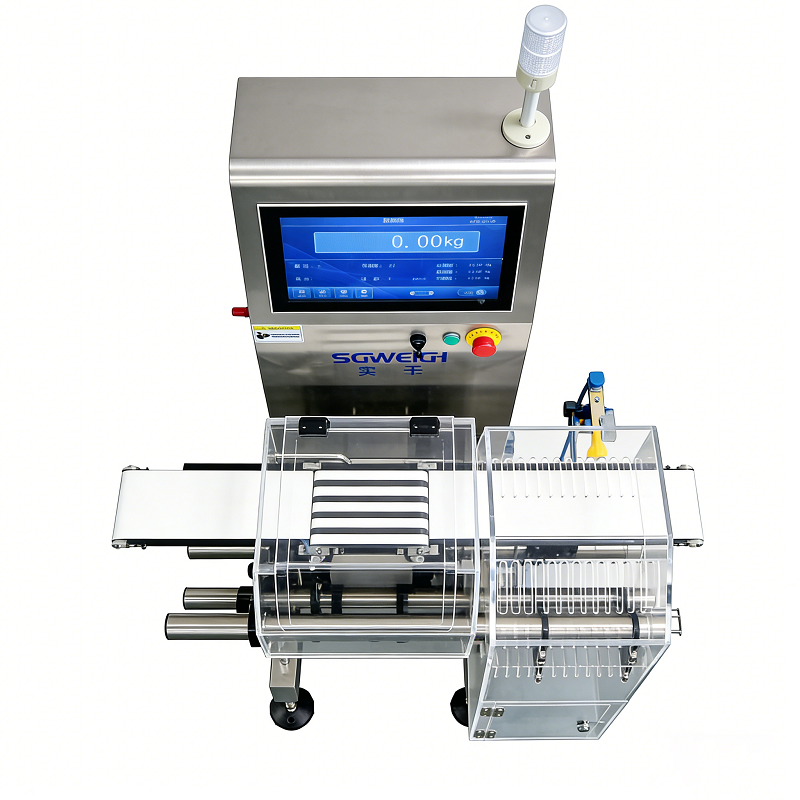
2. Product & Application Conditions
Product Physical Properties
- Weight & Size: Small or lightweight products are more sensitive to external interference.
- Shape & Center of Gravity: Irregular, top-heavy, or easily toppled products reduce weighing stability.
- Surface Condition: Moist, sticky, or slippery surfaces may cause positional deviation on the weighing platform.
Production Line Parameters
- Conveyor Speed: Higher speeds shorten effective sampling time, requiring advanced dynamic algorithms to maintain accuracy.
- Product Spacing: Insufficient spacing causes “overlapping weighing,” leading to inaccurate data.
- Positioning: Products must pass through the center of the weighing platform to avoid eccentric load errors.
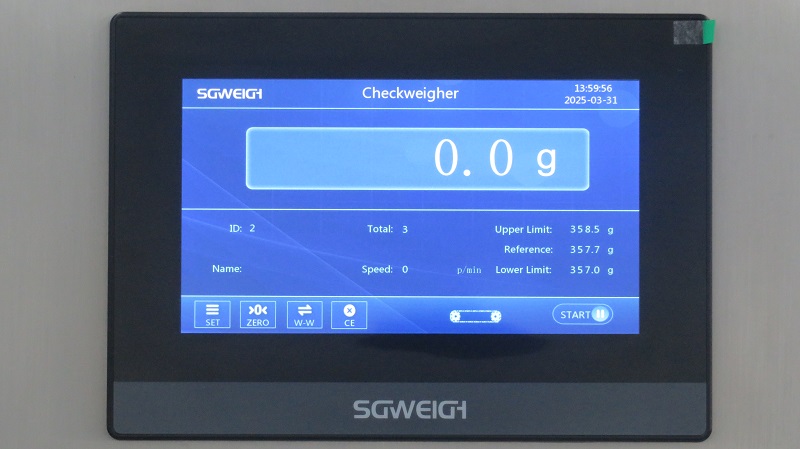
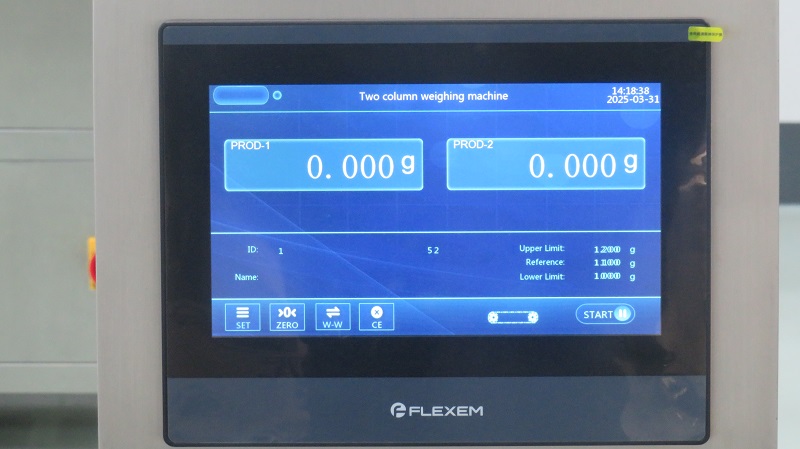
3. Environmental & Interference Factors
Vibration & Airflow
- External vibrations from surrounding equipment (pumps, fans, punch presses) and strong airflow (air conditioners, air curtains) disrupt dynamic weighing.
- Independent, shock-absorbing installation bases are recommended for high-precision models.
Temperature, Humidity & EMI
- Extreme or rapidly changing temperatures affect sensor and structural thermal expansion.
- Electromagnetic interference from inverters, servo drives, and high-power equipment requires proper shielding and grounding.
4. Software Algorithms & Calibration
Dynamic Weighing Algorithms
- Adaptive filtering, peak value detection, and optimized sampling windows to extract valid weight data during motion.
- Automatic zero tracking and motion compensation to maintain stability under varying line speeds.
Calibration & Maintenance
- Regular calibration with traceable standard weights.
- Linear and temperature compensation algorithms to correct systematic errors.
- Scheduled maintenance: belt cleaning, bearing inspection, and component replacement to prevent performance degradation.
5. Installation & Operational Best Practices
- Level, rigid foundation with isolation from adjacent machinery.
- Proper electrical grounding and shielded wiring.
- Operator training for correct parameter setting and routine calibration.
Understanding these factors helps in selecting the right checkweigher model, optimizing installation, and maintaining consistent weighing accuracy for food, pharmaceutical, cosmetic, chemical, and other regulated industries worldwide.

TAGS